



wheelchair for elderly
Choosing a Wheelchair for Seniors: A Thoughtful Selection for Safety, Comfort, and Dignity
As people age, many seniors face mobility challenges due to joint degeneration, muscle weakness, reduced balance, or chronic illnesses (such as arthritis, stroke, Parkinson’s disease, etc.). At this time, a suitable wheelchair is no longer a symbol of “disability,” but an important assistive tool that helps seniors maintain independent living, participate in family activities, and improve their quality of life. However, wheelchair for elderly with a wide range of wheelchair types on the market, how to select a truly safe, comfortable, easy-to-use wheelchair that meets the actual needs of elderly family members? This article provides a comprehensive and practical purchasing guide.
Why Do Seniors Need a Wheelchair?For many seniors, using a wheelchair does not mean “giving up walking,” but a wise energy-saving strategy:
Save physical strength: Avoid fatigue and falls caused by prolonged standing or walking;
Expand activity range: Feel at ease going out for medical treatment, shopping, walking, or participating in community activities;
Enhance safety: Provide stable support when legs and feet are unsteady, reducing the risk of accidents;
Promote social participation: No longer miss family gatherings or friend invitations due to “not being able to walk far”;
Support rehabilitation transition: Temporary assistance during post-operative or illness recovery periods to help smoothly return to daily life.
The key is: Choose a suitable wheelchair that allows seniors to “use it easily, sit steadily, wheelchair for elderly push it effortlessly, and feel no mental burden.”
Common Types of Wheelchairs for Seniors
1. Standard Manual Wheelchair
Applicable scenarios: Short-term use, mainly pushed by others (e.g., hospitals, rehabilitation periods);
Features: Stable structure, with hand brakes and reversible footrests, economical price;
Note: Heavy (usually 30–45 lbs), not suitable for seniors to propel themselves.
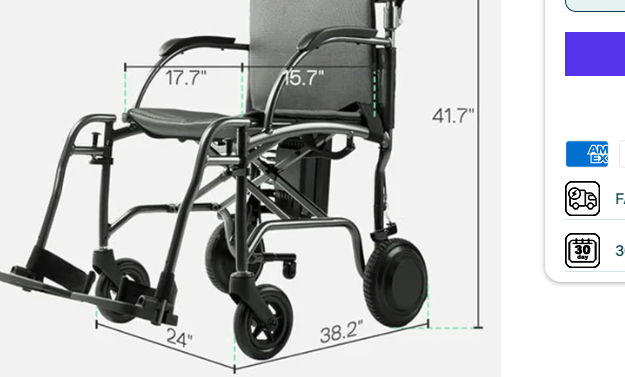
2. Lightweight Transport Chair
Applicable scenarios: Frequent car rides, travel, short-distance outings;
Features: Weighs only 10–18 lbs, can be easily placed in a car trunk, pushed by caregivers;
Advantages: Small size, flexible operation, an ideal choice for home use.
3. Self-Propelled Wheelchair
Applicable scenarios: Active seniors with strong upper limbs who wish to move independently;
Features: Larger rear wheels (20–24 inches) with hand rims for self-propulsion;
Suggestion: Evaluate arm strength and coordination to avoid shoulder strain from overuse.
4. Power Wheelchair
Applicable scenarios: Seniors with weak cardiopulmonary function, limited upper limb strength, or those who rely on wheelchairs all day;
Features: One-button control, labor-saving and worry-free, wheelchair for elderly some models support flexible indoor turning;
Considerations: Higher budget, requires charging, but greatly improves independence and dignity.
Key Considerations for Purchasing a Wheelchair✅ User’s physical condition
Can they transfer independently?
Do they have enough upper limb strength to push the wheelchair?
Is there a risk of pressure sores? Is a special cushion needed?
Does the seat size match their height and weight? (Standard seat width: 16–18 inches)
✅ Main usage environment
Indoor-focused: Choose models with a small turning radius, lightweight and flexible;
Frequent outings or car transfers: Prioritize foldable, lightweight transport chairs;
Long-distance mobility: Consider power wheelchairs or large-wheel self-propelled models.
✅ Caregiver’s capabilitiesIf mainly pushed by family members, choose:
Push handles with non-slip grips;
Reliable hand brakes;
Moderate weight (preferably <20 lbs);
Footrests that flip upward for easy transfer near beds or sofas.
✅ Safety and comfort details
Cushion: High-density foam or gel cushions reduce pressure and prevent bedsores;
Backrest: Height should support below the shoulder blades—too low causes fatigue;
Footrests: Height or angle adjustable to avoid dangling legs;
Safety belt: A waist belt is recommended to prevent forward slipping (especially for seniors with cognitive impairments).
Warm Usage Tips
Test before purchase: Take seniors to a medical equipment store for an on-site trial; observe if their sitting posture is natural and if their feet can rest flat;
Avoid the “bigger is better” misconception: An overly wide seat causes skewed sitting posture, which may affect spinal health;
Regularly check screws and tires: wheelchair for elderly Ensure structural stability and maintain proper air pressure in pneumatic tires;
Teach correct transfer methods: Move from bed to wheelchair or wheelchair to toilet slowly, steadily, and with support;
Respect seniors’ feelings: Some seniors resist using wheelchairs initially—communicate by emphasizing positive meanings, such as “This helps you save energy and stay with us longer.”
ConclusionChoosing a wheelchair for seniors is not just about solving the problem of “being unable to walk,” but also about conveying understanding, care, and respect. A suitable wheelchair allows parents to continue visiting parks, watching grandchildren, going to the market, or even taking a long-awaited trip. It is not a tool that restricts freedom, but a partner that extends the scope of life and safeguards dignity in old age.