



electric lightweight folding wheelchair
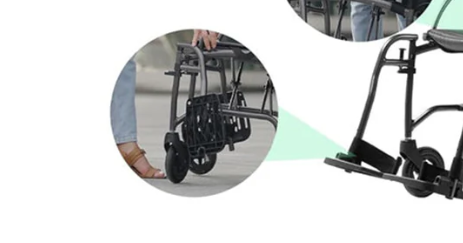
Electric Lightweight Folding Wheelchair: A Three-Dimensional Revolution in Free Mobility
When the convenience of electric drive, the flexibility of lightweight materials, and the portability of folding design converge in a single device, a perfect storm in personal mobility is formed. The electric lightweight folding wheelchair is not only a technological advancement but also the embodiment of a life philosophy—it promises to pack all the advantages of accessible mobility into an easily transportable package.
Core Breakthrough: The Miracle of Merging Three Advantages
Weight Dimension: From Burden to Portability
Traditional electric wheelchairs typically weigh between 80–150 lbs (36–68 kg), becoming a major barrier to transportation and storage. Through material and structural innovations, electric lightweight folding wheelchairs reduce this figure to an astonishing 45–65 lbs (20–30 kg). This breakthrough means:
A single person can easily load it into the trunk of most family cars
Handled as checked luggage rather than special equipment during air travel
Women or the elderly can complete the handling process independently
No dedicated space or equipment is needed for home storage
Power Dimension: Complete Retention of Autonomy
Unlike traditional lightweight manual folding wheelchairs, electric lightweight folding wheelchair do not sacrifice autonomy:
A complete electric control system maintains one-hand operability
A typical range of 15–25 miles (24–40 km) meets all-day needs
A climbing capacity of 6–10 degrees handles daily terrain challenges
A speed adjustment range of 0–6 mph (0–10 km/h)
Folding Dimension: Ultimate Optimization of Space Efficiency
The volume is reduced by 60–75% when folded, and the transition from use to portable state is usually completed within 30 seconds:
Width narrows to 10–15 inches (25–38 cm)
Height reduces to 12–18 inches (30–45 cm)
Can be placed in most wardrobes, closets, or car trunks
Some models fit into dedicated travel cases, just like regular luggage
Material Engineering: A Trio of Lightweighting
Frame Revolution: From Metal to Composite Materials
Aviation aluminum alloy: 7000 series high-strength aluminum, 30% higher strength and 25% lighter weight
Titanium alloy application: Used in top-tier models, with twice the strength-to-weight ratio of steel and excellent corrosion resistance
Carbon fiber breakthrough: The latest technology applies carbon fiber to the main frame, reducing weight by another 40%, with price still being the main threshold
Hybrid structural design: Metals for key stress-bearing parts and composite materials for secondary parts balance cost and performance
Power System Miniaturization
Hub motor integration: A shaftless design fully embeds the power unit into the rear wheels
Thin lithium battery pack: Lithium polymer batteries can be as thin as 0.4 inches (1 cm), fitting the curve of the seat bottom
Distributed controllers: Miniature control modules are arranged dispersedly instead of a single centralized control box
Folding Mechanism Innovation
Self-lubricating hinge system: Aerospace-grade bearings ensure smooth operation even after tens of thousands of folds
Magnetic positioning technology: Automatically adsorbs and fixes when folded in place to avoid loose shaking
Single-point release mechanism: One handle or button controls the synchronous release of multiple lock points
Smart System: Seamless Experience of Folding and Use
Automatic Folding Sequence
High-end models achieve one-click automatic folding:
Safety self-check: Confirms the user has left the seat, footrests are retracted, and there are no obstacles around
Posture adjustment: The seat automatically resets to the optimal folding position
Smart folding: Folds the frame and lowers components step by step in an optimized sequence
Completion confirmation: Audible and visual prompts, with real-time status updates via mobile app
Connected Function Ecosystem
Remote assisted folding: Family members or caregivers can help operate via mobile phone
Smart scene memory: Learns user habits and automatically optimizes the folded shape
Public transport mode: Connects to public transport systems and prepares for quick boarding in advance
Maintenance prediction system: Monitors wear of folding mechanisms and alerts for maintenance parts in advance
Usage Scenarios: Exponential Expansion of Life Radius
Urban Commute Revolution
Multi-modal transportation connection: Electric mode to reach the station, fold to board the subway, unfold again after exiting
Office space-friendly: Folds to be placed beside the desk without occupying public passages
Barrier-free social occasions: Easily stored in restaurants, cinemas, or friends' homes
Rebirth of Travel Freedom
Regularization of air travel: Meets carry-on luggage size requirements of most airlines
Flexible hotel accommodation: No need for special accessible rooms, can be easily stored in ordinary guest rooms
Unimpeded attraction exploration: Places like museums and art galleries are no longer limited by bulky equipment
Home Life Optimization
Dynamic space management: Unfolded for use during the day, folded to free up living space at night
Multi-floor convenience: Easily transported and transferred between different floors
Emergency advantages: Can be quickly folded and carried in case of emergency evacuation
Technical Types: Precise Matching of Different Needs
Ultra-Portable Commuter Type
Weight: 45–50 lbs (20–23 kg)
Features: Minimalist design, fastest folding speed, focusing on flat urban roads
Range: 10–15 miles (16–24 km)
Suitable for: Office workers and students who frequently use public transportation
All-Round Daily Type
Weight: 55–60 lbs (25–27 kg)
Features: Balanced design, moderate folding size, good terrain adaptability
Range: 15–20 miles (24–32 km)
Suitable for: Active users who mainly use it daily and balance outdoor activities
Enhanced Performance Type
Weight: 60–65 lbs (27–30 kg)
Features: All-terrain capability, slower folding process, emphasis on durability and comfort
Range: 20–25 miles (32–40 km)
Suitable for: Users who need to handle complex terrain and focus on long-distance use
Purchasing Decision: The Art of Balance
In-Depth Analysis of Personal Needs
Transportation frequency analysis: How many times do you need to fold and carry it daily? Who will operate it?
Usage environment assessment: Indoor/outdoor ratio, typical terrain, climate conditions
Mobility mode research: Main types of transportation, precise dimensions of storage space
Physical needs consideration: Seat comfort requirements, control method preferences
Future change foresight: Possible changes in living conditions in the next few years
Key Trade-Off Points
Folding speed vs. structural rigidity: Faster folding usually means more moving parts
Weight limit vs. range demand: Batteries are the largest source of weight
Automation level vs. cost budget: Each smart function increases price and complexity
Compact size vs. riding comfort: Balance between ultra-thin design and long-time comfort
Maintenance Science: The Long-Term Way for Precision Equipment
Special Care for Folding Mechanisms
Monthly inspection: Wear and looseness of all hinges and latches
Quarterly lubrication: Maintain moving parts with specified lubricants, avoid ordinary grease
Annual professional inspection: Check structural integrity and alignment accuracy by authorized service centers
Portable Optimization of Battery Systems
Thermal management strategy: Smart temperature control system in compact layout
Quick charging compatibility: Supports 1-hour fast charging without significantly affecting lifespan
Transportation safety mode: Special discharge state complying with aviation regulations
Electrical System Protection
Connector maintenance: Regular inspection and cleaning of frequently plugged/unplugged parts
Cable management: Avoidance and protection mechanisms for cables during folding
Waterproof and dustproof: Sealing protection for key interfaces in folded state
Future Vision: The Next Round of Evolution Direction
Frontiers of Materials Science
Graphene composite materials: Theoretically 200 times stronger than steel with extremely light weight
4D printed structures: Smart material folding mechanisms that can deform automatically
Self-healing coatings: Surfaces that can automatically repair minor scratches
Energy System Breakthroughs
Solid-state battery integration: Doubles energy density and greatly improves safety
Wireless inductive charging: Automatically charges when parked in specific areas
Solar supplement system: Integrates flexible photovoltaic materials to supplement energy during the day
Artificial Intelligence Integration
Predictive behavior learning: Prepares equipment status in advance according to user habits
Environmental interaction intelligence: Identifies different scenarios and automatically adjusts configurations
Health data integration: Connects mobility data with health monitoring systems
Social Significance: An Equalizer for Independent Life
The popularization of electric lightweight folding wheelchairs is reshaping society's understanding of accessible mobility:
Spatial Democratization
Any vehicle can become a means of transportation, no longer requiring specially modified cars
Any room can accommodate the equipment, no longer requiring special storage arrangements
Any journey can be decided spontaneously, no longer requiring complex advance preparation
Normalization of Social Participation
Social activities change from "whether one can participate" to "whether one wants to participate"
Career choices change from "whether transportation allows" to "whether ability matches"
Daily life changes from "planned exceptions" to "natural normality"
Deepening of Psychological Liberation
When technical barriers are eliminated:
Self-identity returns from "wheelchair user" to "person"
Social interaction shifts from "being cared for" to "equal participant"
Life attitude changes from "adapting to limitations" to "exploring possibilities"
Conclusion: Folded Deformation, Unfolded World
Choosing an electric lightweight folding wheelchair is not only choosing a device but also a life stance—believing that limitations can be redefined, obstacles can be overcome with wisdom, and freedom can be expanded through technology.
Every exquisite fold is a creative negotiation of space; every easy unfold is a re-embrace of the world. Between folding and unfolding, the precise calculations of engineers seamlessly connect with users' daily lives, and technological innovation perfectly integrates with humanistic care.
When technology is thoughtful enough, it quietly fades into the background, leaving human experience as the sole focus. An excellent electric lightweight folding wheelchair is exactly like this—when you need to move, it is a powerful and loyal partner; when you need space, it humbly folds itself and exits quietly.
This is not just an upgrade of a mobility tool, but a profound transformation of independent life: letting power accompany you without becoming a burden; letting technology serve without creating obstacles; letting every departure start with a simple wish rather than complicated preparation.
In this foldable electric lightweight wheelchair, we see not only the ingenuity of machinery but also the eternal pursuit of human creativity—we constantly rethink the boundaries of possibilities, fold "unachievable" into history, unfold "achieved" in the present, and nurture "to be achieved" in the future. Between this continuous opening and closing, a more free, equal, and promising world is slowly unfolding.