



tub transfer chair
Tub Transfer Chair: Overcoming Barriers, Regaining Autonomy in Safe Bathing
Bathing is meant to be a private moment of relaxation and rejuvenation. Yet for elderly individuals with limited mobility, post-surgical recovery patients, or people with physical disabilities, the common household bathtub can become an insurmountable "safety gap." Slippery surfaces and tub walls tens of centimeters high make every simple bath filled with uncertainty and risk. At such times, the Tub Transfer Chair acts as a sturdy and reliable bridge—not only overcoming physical barriers but also safeguarding the user’s safety, independence, and dignity.
How Does It Work? Core Design Analysis
The Tub Transfer Chair is a highly specialized mobility aid, with its design centered around two key functions: safe transfer and stable seating:
Sit Outside the Tub, Slide in Smoothly
The user first sits on the transfer chair in the dry area outside the tub (its height is usually flush with a wheelchair). The chair is equipped with lockable casters to ensure safety during initial seating.
Independent Horizontal Sliding, Crossing the Tub Wall
Move the chair to the edge of the tub by pushing the rear wheels. After releasing the sliding lock, the seat portion of the chair can slide horizontally and smoothly "glide" onto a dedicated base fixed inside the tub. Throughout the process, the user does not need to stand up or lift their legs to cross—their feet can stay on the ground, achieving true weight-free transfer.
Bathe Stably, Return Easily
After bathing, reverse the operation to slide out of the tub effortlessly, return to the dry area, and then proceed with dressing and tidying up.
Why Is It an Indispensable Safety Assistant?
Eliminate the Biggest Risk Point
Statistics show that most bathroom falls occur when entering or exiting the tub. The transfer chair fundamentally eliminates this high-risk action.
Maximize Independence
Users can complete the entire transfer process with their own arm strength without direct assistance, greatly preserving personal privacy and psychological dignity.
Reduce Caregiver Burden
For caregivers (especially family members), it eliminates the heavy and dangerous physical labor of lifting or carrying, making the assistance process safer and easier.
Multi-Functional Integrated Design
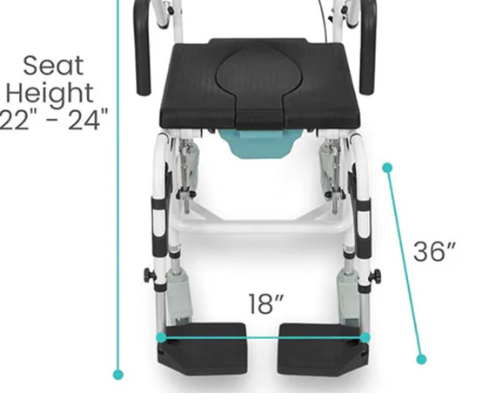
Adjustable Components: The backrest height, armrests (often flip-up or detachable), and footrests are all adjustable to fit different body types and tub sizes.
Anti-Slip and Drainage: The seat surface is non-slip with breathable holes, allowing water to drain quickly.
Sturdy and Durable: The main body is made of rust-resistant anodized aluminum or reinforced plastic, ensuring long-term use in humid environments.
How to Choose the Most Suitable Model?
A practical transfer chair needs to perfectly match the user and the bathroom environment. Pay attention to the following points when purchasing:
Precise Measurement Is the First Step
Internal Tub Dimensions: Length, width, and depth to ensure the base can be stably placed.
Tub Edge Thickness: Confirm that the chair’s sliding track can fit effectively.
Bathroom Door Width: Ensure the transfer chair can pass through smoothly.
Key Functional Considerations
Weight Capacity: Choose a model with a capacity higher than the user’s weight to leave a safety margin.
Seat Type: Solid-panel seats are more comfortable; hollow mesh seats drain faster and are easier to clean.
Sliding Mechanism: Test if sliding is smooth and effortless, and if the locking is secure.
Additional Functions: Select whether to have a backrest, detachable armrests, or a foldable design based on needs.
Safety Certification and Brand Reputation
Prioritize brands that comply with medical assistive device safety standards and have a good reputation.
Beyond a Tool: A Promise of Peace of Mind and Emotional Support
The value of a tub transfer chair goes far beyond its physical functions. It represents a deep-seated concept of care: safety is the foundation of dignity; independence is the core of quality of life.
For users, it means: "I can still do this safely and with dignity."
For family members, it means: "Even if I can’t be there to assist every moment, there is a reliable ‘partner’ guarding their safety."
It transforms the worrying bathroom back into a comfortable space for relaxation and enjoyment, rather than a tense "battlefield."
Conclusion: Investing in Safety Is Investing in Quality of Life
With the aging population and growing demand for home rehabilitation, aging-friendly and barrier-free products like the tub transfer chair are shifting from "special needs" to staples of "smart living." It is not a symbol of compromise, but an active and proactive life solution.
Choosing the right tub transfer chair clears a major safety hazard for yourself or your loved ones, and endows daily life with more autonomy and peace of mind. It silently guards every daily bath, allowing cleaning and relaxation to return to their most authentic and reassuring form—and this is the deepest and most practical care for life.