



wheeled shower chair
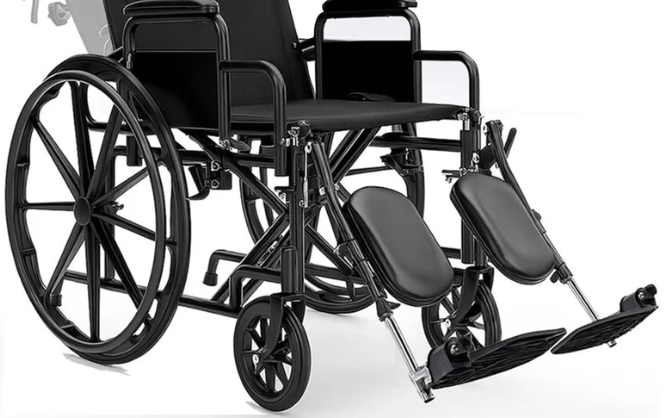
Purity on Wheels: How Wheeled Shower Chairs Rewrite the Narrative of Dignity in Bathing
At 10 a.m. on Wednesday, Tang Wanhua gently pushed open the bathroom door, grasped the armrests of a wheeled shower chair, and transferred herself from her bedroom wheelchair to the chair. She turned the front wheels, glided smoothly into the shower area, and tapped the foot-controlled wheel lock with her ankle. With a soft "click," water cascaded gently from the overhead showerhead. For this retired teacher living with rheumatoid arthritis for 12 years, this wheeled shower chair is not just a bathroom fixture, but a "private ferry to cleanliness"—it bears not only her physical weight, but also the sense of independence and boundaries of dignity she struggles to protect amid illness.
In China, as aging accelerates and rehabilitation concepts advance, wheeled shower chairs are rapidly moving from exclusive medical equipment to millions of households. This product, integrating ergonomics, materials science, and accessible design, is deconstructing the traditional script of "bathing"—one of the most intimate daily activities. When cleanliness no longer requires assistance from others, bodily autonomy is preserved even in moments of vulnerability.
Design Analysis: Why Four Wheels Redefine Bathroom Safety
Triple Safety Logic of Structure:
Anti-tip design: Wide wheelbase (typically 65–75 cm) paired with a low center of gravity (seat height 45–55 cm) prevents tipping even under 150N (≈15 kg) lateral force. The seat’s backward tilt is limited to 12 degrees to avoid users slipping backward.
Wet anti-slip system: Soft polyurethane wheel surfaces achieve a static friction coefficient of 0.8 on wet tiles (1.2 on dry surfaces), far exceeding the international standard of 0.5. Wheel axles feature built-in drainage grooves to prevent bearing rust from water accumulation.
Controlled movement: Foot-activated wheel locks secure all wheels in 0.5 seconds; high-end models include electronic fencing that automatically slows the chair and sounds an alert if it exits preset boundaries (e.g., shower area limits).
Waterproof Philosophy of Materials:
Though seemingly simple, the chair must withstand the harshest bathroom environments:
Frame: 316L medical-grade stainless steel or anodized aluminum, resistant to chloride corrosion (common in tap water).
Seat surface: Perforated high-density PE plastic (3–5 mm holes, drainage rate >500ml/min).
Armrests: Soft TPE coating with micro-texture, maintaining a friction coefficient >0.6 even when covered in shower gel.
Bearings: Fully sealed ceramic bearings, tested to operate continuously for 300 hours submerged in 5 cm of water without failure.
Ergonomic Human-Machine Interaction Details:
Five-level adjustable armrest height (60–75 cm) to accommodate varying upper limb strength.
Three-level adjustable backrest tilt (95°/105°/115°) for both shower comfort and easy hair washing.
Removable front footrest: Supports legs for patients with lower limb edema; detachable for caregivers to assist closely.
Antibacterial design: All surface coatings contain silver-ion antibacterial agents to inhibit mold growth.
Usage Scenarios: Who Needs This "Mobile Bathroom Chair"?
Progressive Disease Patients (≈41%):
Patients with multiple sclerosis, amyotrophic lateral sclerosis (ALS), or Parkinson’s disease.
Characteristics: Mobility declines gradually over time, requiring equipment that "adapts to changes."
Case Study: Mr. Li, an ALS patient in Shanghai, has independently showered for three years by adjusting the chair’s height and armrest angles. "From transferring independently to needing my wife to gently support my waist, this chair has documented the progression of my disease while safeguarding my dignity at every stage."
Post-Joint Replacement Patients (≈33%):
Within 3 months of hip/knee replacement, excessive flexion of the affected limb is prohibited (hip <90°, knee <60°).
Traditional shower stools fail to address the mobility challenge of "entering/exiting the shower area."
Clinical Data: Patients using wheeled shower chairs achieve their first independent shower an average of 5.2 days earlier post-surgery, with a 73% reduction in avoidance of bathing due to fear of falling.
Frail Elderly (≈26%):
Sarcopenia leads to limited standing endurance (usually <3 minutes).
Declining balance increases risk of falling when turning to wash their backs.
Research: Wheeled chairs providing stable seating with slight mobility reduce the fall risk during bathing for adults over 80 from 18.7 per 1,000 attempts to 2.3.
Bathroom Renovation: When the Chair Becomes the Spatial Core
Minimal Renovation Plan:
Remove traditional shower thresholds (3–8 cm high) and replace with gentle slopes (≤5% gradient).
Adjust the minimum shower area size to 120×90 cm (to accommodate chair rotation).
Install a sliding rod for the showerhead, with an adjustable height range of 80–160 cm.
Total renovation cost: ¥2,500–4,500, far lower than full accessible bathroom renovations (¥20,000+).
Chair-Centered Spatial Logic:
Excellent design positions the chair as the hub of bathroom movement:
Transfer zone (dry area): Chair height matches wheelchairs (48–52 cm) for seated lateral transfers.
Movement channel: Width ≥85 cm for unobstructed chair passage.
Washing zone (wet area): Floor slopes 1–2% toward drains; chair wheel locks automatically strengthen in this zone.
Drying and dressing zone: L-shaped handrails allow users to grip and stand while drying.
"Traditional accessible renovations often turn bathrooms into ‘medical spaces,’" says interior designer Chen Lu. "The wheeled shower chair solution preserves more of a homey feel. Since the chair is mobile, the rest of the bathroom can remain more ‘normal.’"
Psychological Dimension: How Cleanliness Becomes a Ritual of Autonomy
A study by the Rehabilitation Psychology Research Group at Peking University found:
Reconstruction of Control:
91% of respondents using wheeled shower chairs stated that "deciding when to start and end showers" holds significant psychological value. In contrast, those requiring assistance often exhibit avoidance behaviors such as "delaying bathing" or "shortening shower time."
Improvement of Body Image:
Regular independent thorough cleaning helps alleviate the "sense of bodily alienation" caused by illness or aging. A rheumatoid arthritis patient described: "When I can wash every part of my body myself, my relationship with my body shifts from ‘resistance’ to ‘care.’"
Preservation of Privacy:
Typical Case: A young woman with a spinal cord injury previously required assistance from both her mother and a caregiver to bathe: "I felt like an object." After using the chair, she only needs her mother to wait outside the door: "The moment I close the door, I regain a complete private moment."
Care Economics: Hidden Costs and Long-Term Value
Direct Cost Comparison:
Mid-range wheeled shower chair: ¥2,800–4,200
Professional bathing assistance: ¥150–300 per session (2–3 times weekly, annual cost ≈¥15,000–47,000)
Nursing home upgrade to bathing suite: ¥800–1,500 monthly surcharge
Reduction of Care Burden:
Tracking data from a Nanjing community shows families using wheeled shower chairs:
Reduced bathing assistance time from an average of 42 minutes to 15 minutes per session.
61% decrease in caregiver hospital visits for lumbar strain.
78% reduction in family conflicts caused by bathing-related disputes.
"My mother used to dread helping my father bathe," shares Ms. Wang from Shanghai. "It wasn’t that she didn’t want to, but that she feared dropping him. Now she just pushes the chair under the shower and waits outside. For those half an hour, she can drink tea and read the news—it’s a kind of liberation for her too."
Technological Frontiers: Intelligent Water and Care
Anti-scald System:
Temperature sensors integrated into armrests trigger responses when water exceeds 41℃ (optimal temperature for the elderly is 38–40℃):
Three alert beeps.
Red LED ring on armrests.
On select models, automatic adjustment of smart mixing valves.
Physical Condition Monitoring and Alerts:
Pressure sensor arrays detect:
Posture stability: Alerts for abnormal shaking (indicating dizziness or muscle tone episodes).
Shower duration: Gentle reminders after 20 minutes (optimal duration for the elderly).
Usage frequency: Alerts emergency contacts if unused for 3 consecutive days (preventing sudden health issues).
Memory and Adaptation:
High-end models learn user habits:
Preferred water temperature (e.g., hotter on Mondays, cooler on Fridays).
Frequently used positions (e.g., under the showerhead for hair washing, side position for body cleaning).
Automatically records and generates "bathing health reports" for rehabilitation therapists.
Cultural Adaptation: When Western Design Meets Chinese Bathrooms
Size Redesign:
Average Chinese residential bathroom size is 2.8–4.5 square meters (vs. 5–8 square meters in Western homes), often rectangular. Optimized models include:
"Narrow-body long-axis" versions (58 cm wide, 75 cm long).
Small-diameter (12 cm) swivel rear wheels for enhanced maneuverability in tight spaces.
Wall-foldable design: 18 cm thick when stored, not obstructing daily passage.
Habit Compatibility:
Removable handheld shower brackets: Aligns with Chinese preferences for handheld rinsing.
Reinforced mold resistance: Adapted to high humidity in the Jiangnan region.
Optional bucket-style seat cushions: For elderly users accustomed to sitting baths.
Application Transformation in Public Bathhouses:
A historic public bathhouse in Shenyang renovated to include 6 wheeled shower chair cubicles. The manager notes: "Many of our regulars are in their 70s and 80s, unable to stand while bathing. They stopped coming before, but now they visit weekly and chat with old friends—the bathhouse has regained its community function."